
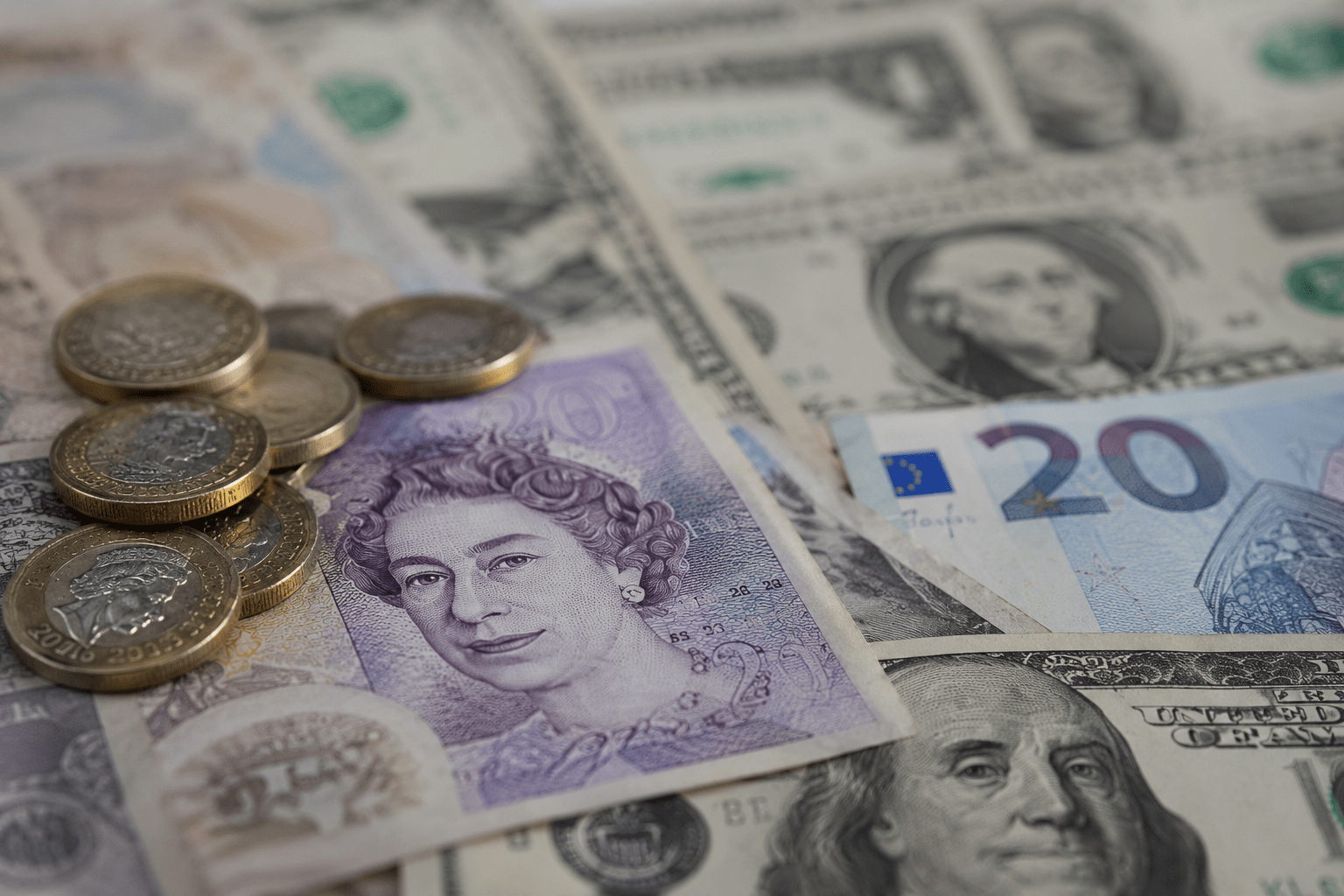
Sterling weakened against both the dollar and the euro on Tuesday as investors closely monitored political developments in the UK amid mounting concerns over Prime Minister Keir Starmer’s future in office.
Starmer was consulting colleagues on Tuesday about whether he could remain as prime minister ahead of a crucial cabinet meeting.
The discussions followed the resignation of ministerial aides and growing pressure within the ruling Labour Party, with nearly 80 lawmakers publicly calling for him to step down after the party’s heavy losses in last week’s local elections.
The political uncertainty weighed heavily on the British currency and government bond markets, as investors feared that a leadership change could lead to looser fiscal policies and increased public borrowing.
Sterling falls against dollar and euro
The pound dropped 0.45% against the US dollar to trade at $1.3550 on Tuesday.
The decline came after sterling had gained more than 0.5% on Friday last week when Starmer had vowed to remain in office despite the Labour Party’s poor election performance.
Sterling had touched $1.3658 last week, its strongest level since February 16, before reversing course amid the latest political concerns.
Against the euro, the pound also weakened.
Sterling fell 0.17% to 86.72 pence per euro, marking its lowest level since April 28.
Currency markets appeared increasingly concerned about the possibility of Starmer being replaced by a more left-leaning Labour leader.
Investors fear such a shift could result in higher government spending and increased borrowing, placing additional strain on Britain’s already fragile public finances.
Bond yields climb sharply
UK government borrowing costs also moved higher on Tuesday as traders assessed the potential implications of political instability on fiscal policy.
The benchmark 10-year gilt yield rose 11 basis points to 5.11%.
The move pushed yields close to the highest levels seen since 2008, levels previously reached in March amid concerns about the inflationary impact of the Iran conflict.
Meanwhile, the 30-year gilt yield, which is considered particularly sensitive to long-term fiscal concerns, climbed 10 basis points to 5.78%.
That level was close to highs last seen in 1998, which had been touched only last week.
The sharp rise in yields reflected investor nervousness over the prospect of increased government borrowing should Labour move away from what markets view as fiscal discipline under Starmer’s leadership.
Markets react to leadership uncertainty
Broader UK financial markets also came under pressure.
Alongside the decline in sterling and the jump in borrowing costs, shares fell as investors braced for the possibility of a change in leadership.
Market participants have increasingly focused on whether the current government can maintain fiscal rigour at a time when Britain’s finances remain under strain.
The latest developments have intensified concerns that prolonged political instability could further unsettle bond and currency markets, particularly as investors continue to monitor inflation risks and geopolitical tensions linked to the Iran conflict.
Starmer’s cabinet meeting later on Tuesday was expected to be closely watched by markets for any indication about the prime minister.
The post Sterling falls against dollar and euro as UK political tensions rise appeared first on Invezz