
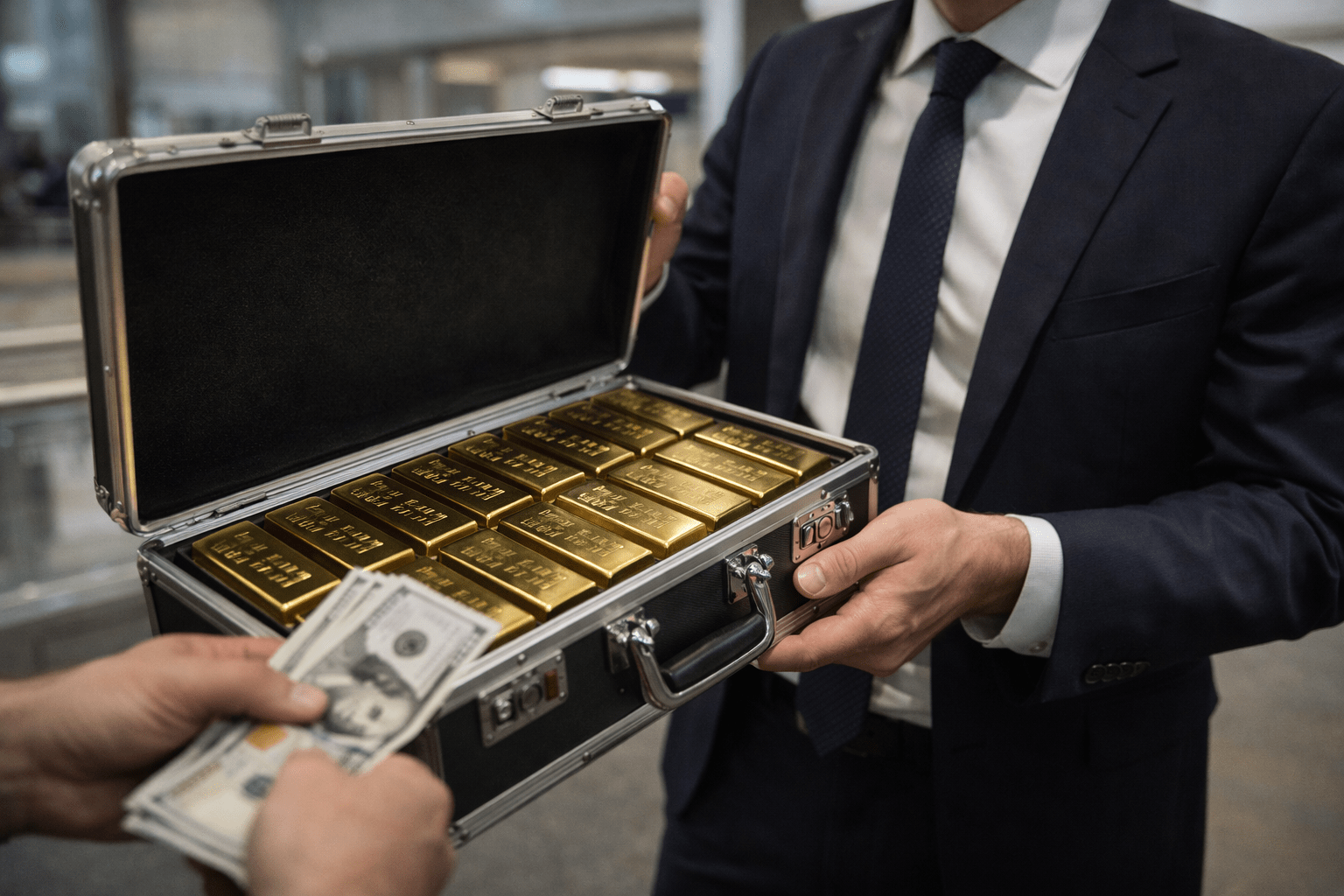
Gold has fallen about 12% since the Iran conflict began, defying its traditional safe‑haven role.
ING strategist Ewa Manthey says the sell‑off reflects macro headwinds from higher oil prices, stronger yields, and a firmer dollar, but forecasts prices could still rise to $5,000 per ounce by year‑end.
Gold’s counterintuitive decline
Gold is typically seen as a hedge in times of crisis, yet since the outbreak of the Iran war, it has dropped sharply.
According to ING Economics, the metal has lost around 12% since late February, a move Manthey describes as “counterintuitive but explainable.”
“Gold’s safe‑haven appeal tends to perform best in a financial crisis or growth shock – when real yields fall, and the dollar weakens,” Manthey noted.
A supply‑driven energy shock does the opposite. Higher oil prices push inflation up, keep central banks on hold and strengthen the dollar, all of which weigh on gold.
Macro headwinds
The Federal Reserve’s decision to leave rates unchanged in April added to the pressure.
Inflation has re‑accelerated since the war began, reducing the case for near‑term easing.
Manthey explained: “Real yields and the dollar remain the key constraints on gold. A prolonged energy shock could push back the timeline for Fed cuts.”
Friday’s US payrolls data showed continued labor market strength, with unemployment steady at 4.3%.
That gave the Fed little reason to rush into rate cuts, reinforcing the higher‑for‑longer narrative that has weighed on bullion.
Peace talks and geopolitical risk
Gold briefly rallied last week but gave back gains after US President Donald Trump rejected Iran’s latest peace proposal as “totally unacceptable.”
Manthey said: “The setback keeps the ceasefire timeline uncertain and inflation risks elevated – reinforcing the higher‑for‑longer rate narrative that has weighed on gold throughout the conflict.”
She added that a durable resolution remains the key catalyst for a sustained recovery.
Until then, gold is likely to remain caught between geopolitical uncertainty and monetary headwinds.
Central bank demand
Despite short‑term weakness, central banks continue to provide structural support.
China’s central bank added 8.1 tonnes in April, extending its buying streak to 15 consecutive months.
Poland also increased reserves by 31 tonnes in Q1, while Turkey was the largest seller, cutting holdings by 60 tonnes to support foreign exchange liquidity.
Manthey emphasised: “Reserve diversification remains supportive for gold over the medium term, even as some central banks sell to shore up liquidity.”
ETF flows turning positive
Investor positioning is also shifting.
Global gold ETFs recorded $6.6 billion of inflows in April, reversing March outflows.
Europe led the move, reflecting concerns about exposure to a Strait of Hormuz closure.
Contributions from Asia and the US were around a third of Europe’s over the month, according to data from the World Gold Council.
Manthey said: “ETF flows track Fed expectations closely – Fed easing should be a catalyst for renewed inflows in the second half.”
The sustained net long positions of managed money on COMEX suggest a positive outlook among investors, although the positioning is not yet considered excessive or “crowded.”
Outlook: constructive despite risks
ING remains constructive on gold, projecting prices could climb to $5,000 per ounce by year‑end.
Manthey cautioned, however, that risks remain: “The main downside risk is a breakdown in peace talks that keeps energy prices elevated and the Fed on hold into year‑end.”
Gold’s safe‑haven role is not in question. But recent months have shown that short‑term price action can still be dominated by macro forces – particularly real yields, the dollar and expectations for Fed policy. Once those headwinds begin to ease, gold’s underlying support should reassert itself.
At the time of writing, the most-active June gold contract on the COMEX was at $4,729 per ounce, largely unchanged from the previous close.
The post ING sees gold near $5,000/oz by year‑end despite current weakness appeared first on Invezz